

Resources and insights

The latest industry news, interviews, technologies, and resources.

Latest News

AI is everywhere and nowhere…

AI is everywhere and nowhere…

As a seasoned CTO with over two decades in the tech industry, I’ve witnessed firsthand the evolution and hype cycles of countless technologies. Currently, AI is the buzzword on everyone’s lips. However, the reality of AI’s capabilities versus its marketing portrayal is a stark contrast. In this article, I aim to demystify AI for fellow tech leaders and share my perspective on the current state of the tech market ‘leveraging AI’. The AI Misconception AI has become a ubiquitous term, plastered across marketing materials and product descriptions. However, much of what is branded as AI today is not the advanced, thinking machine of science fiction lore. Instead, it’s typically what we call narrow AI (ANI), designed for specific, specialised tasks. The classic depictions of AI from sci-fi – think HAL 9000, Commander Data (showing my geekiness and age) or for those millennials, Jarvis from Iron Man – fall into the category of artificial general intelligence (AGI), capable of reasoning and adapting across a wide range of scenarios. We are far from achieving AGI, and most “AI” in the market today is a far cry from these fictional portrayals. The Reality of Narrow AI Modern AI technologies, such as GPT-4, excel in specific tasks like natural language processing. They can generate human-like text, analyse patterns in data, and even create art based on existing styles. However, these systems are essentially advanced pattern recognisers. They process vast amounts of data to identify trends and produce outputs that align with their training data. Despite their impressive abilities, these AI systems lack true understanding or reasoning. They do not comprehend the context of the data they process, which can lead to significant errors when faced with novel situations outside their training. This limitation is often glossed over in marketing materials, leading to a disconnect between consumer expectations and actual capabilities. The Marketing Hype The tech industry is rife with companies eager to slap the AI label on their products to capitalise on the hype. This practice not only misleads consumers but also sets unrealistic expectations. For instance, autonomous driving technology is frequently touted as ‘AI-powered’. While these systems use advanced algorithms and sensors to navigate, they are still prone to errors and require significant human oversight. Misleading marketing in such critical applications can have serious safety implications. Machine Learning and Large Language Models A significant subset of AI is machine learning (ML), which involves training algorithms to learn from data and make predictions or decisions without being explicitly programmed. Within ML, large language models (LLMs) like GPT-4 have garnered significant attention. These models are trained on vast amounts of text data and can generate coherent, contextually relevant responses. However, their capabilities are often overstated. LLMs can produce human-like text but lack true understanding and can make mistakes, especially when faced with unfamiliar scenarios. Practical Applications and Limitations Despite the overhyping, narrow AI and ML have practical and valuable applications across various domains: Cloud Computing: AI-driven resource management and optimisation improve efficiency and reduce costs. Cybersecurity: AI helps in detecting anomalies and potential threats in real-time, enhancing security measures. Data Analysis: AI algorithms assist in processing and analysing large datasets, uncovering insights that would be difficult for humans to detect. These applications demonstrate AI’s potential when applied correctly within its limitations. However, it is crucial for tech leaders to recognise that these systems are not infallible. They operate based on the data they have been trained on and can struggle with scenarios that deviate from this data. Understanding these limitations is essential for making informed decisions about AI deployment in critical systems. Orchestrating AI Agents Think of AI as an orchestra, where each AI agent is a musician specialising in a particular instrument. Individually, they can perform specific tasks expertly. When orchestrated correctly, they can produce a harmonious symphony that performs complex, multi-faceted tasks. This orchestration is crucial for deploying AI effectively, ensuring that each AI agent contributes to the overall goal without overstepping its capabilities. The Path Forward As AI technology continues to evolve, it will become increasingly difficult to distinguish between machine-generated and human-created content. This raises concerns about authenticity and trust, especially as generative models improve. For tech leaders, the key is to remain skeptical of overblown claims and focus on the practical, demonstrable benefits of AI. Conclusion AI is indeed everywhere and nowhere. It is a powerful tool with the potential to revolutionise industries, but it is not the omnipotent force that marketing would have us believe. As tech leaders, it is our responsibility to cut through the hype and focus on the real capabilities of AI. By doing so, we can harness its power to drive innovation while setting realistic expectations and maintaining the trust of our customers and stakeholders. About Javid Javid is SmartCo’s Partner & technology executive with expertise in cloud computing and transformations. He combines business and technical strategy while leading complex cloud and digital transformation programmes across organisations. About SmartCo Consulting SmartCo is a consultancy business specialising in the delivery of digital transformation projects for large private and public sector organisations. We offer advisory, project delivery and optimisation services across a range of industries including Healthcare, Consumer & Retail, Media & Telco and Financial Services.

Javid Khan
We’re proud to make the list!

We’re proud to make the list!

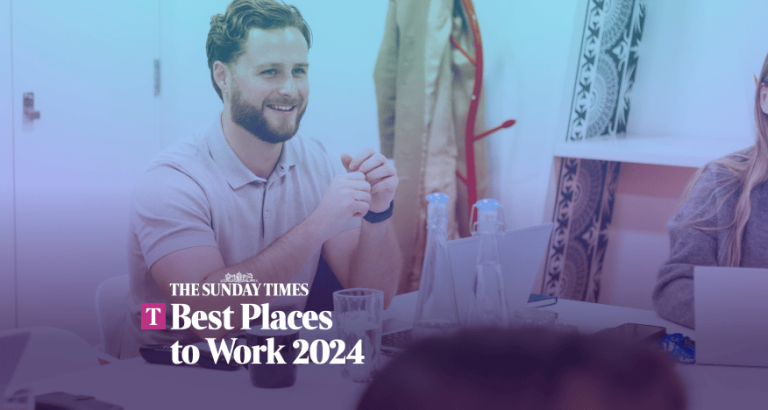
SmartCo is proud to feature in the Sunday Times Best Places to Work 2024 This nationwide survey honours and celebrates Britain’s top employers, including over 500 organisations of varying sizes and from different industries. This recognition is a true testament to our incredible team and the people first culture we have here at SmartCo. We’re so proud of the values we share and the dedication we have to fostering an exceptional workplace culture. ’25 years of experience in building businesses has taught me that the people and culture are by far the two most important elements of any company. A positive environment, where colleagues trust and respect each other, benefits all involved. I’m incredibly proud of the team and culture we’re creating at SmartCo, whilst recognising it’s always a work in progress. We’ll continue to do all we can to ensure we are the best employer we can possibly be.’ Rhys Hefford, CEO

Hannah Granshaw
Welcome to Andy Tidd

Welcome to Andy Tidd

We are thrilled to announce Andy Tidd’s new role within SmartCo as Director, Manging Consultant – Delivery Services. Wishing you a warm welcome from the entire SmartCo team. We sat down with Andy to ask him a few questions about his career path, his new role at SmartCo, what excites him most about working at SmartCo and what he enjoys doing in his spare time. Hi Andy. So, what has been your career leading up to SmartCo? Over the past 30+ years I have worked for a number of blue-chip companies such as IBM, HP, Sony, Vodafone, in addition to logistic and manufacturing companies. Within each of these businesses I was a senior leader for major programmes of work across the UK, Europe and Globally. What is your new role and key responsibilities at SmartCo? As Director / Managing Consultant, I’m responsible for portfolio management of major customers as well as working on other key customers across project and programme governance. What most excites you about being part of the team? SmartCo is a dynamic consultancy, making significant progress changes within mid to high end consultancy. It’s an inspirational company with forward thinking values, making it an exciting place to work. There’s energy and enthusiasm everywhere within the teams. Working in partnership with our customers, taking projects to a new level of smart working, really makes a difference to how we progress and deliver significant outcomes. What’s unique about SmartCo? SmartCo feels like an extended family! We are big enough to count, but small enough to care. With a culture of open mindedness that is part of the core DNA. What are your interests and hobbies? I have a wonderful wife, two dogs that keep me healthy, five grandchildren that keep me grounded and an obsession with farm equipment! I love travelling and seeing new places, culture and culinary experiences.

Hannah Granshaw
Navigating the cloud landscape

Navigating the cloud landscape

As we embark on 2024, the cloud computing landscape is poised for an era of significant transformation. This year marks a period of rapid innovation, presenting both challenges and unparalleled opportunities in the tech world. The fusion of cloud technology with advancements in cybersecurity and artificial intelligence, which began taking shape in 2023, is now accelerating, paving the way for groundbreaking developments. This year, we’re not just witnessing a continuation of trends; we’re at the cusp of a new chapter in cloud computing, one that promises to reshape the industry and redefine our approach to digital solutions. Our top 10 Cloud Trends and Predictions in 2024 1. The New Age of Diverse Cloud Solutions In 2024, the concept of a one-size-fits-all cloud solution is becoming obsolete. We’re transitioning to a dynamic era where hybrid and multi-cloud environments are the norm. This approach integrates on-premises infrastructure with diverse cloud services, primarily offered by Amazon AWS, Microsoft Azure and Google Cloud Platform (GCP), offering businesses unprecedented flexibility. This evolution allows organisations to tailor their cloud resources to specific needs, ensuring redundancy and embracing vendor-agnostic solutions. It’s a significant leap towards a more customised, efficient and resilient cloud computing landscape, suitable for companies of all sizes. 2. Complexities in a Multi-Cloud World The shift towards multi-cloud environments in 2024 brings its own set of challenges. As organisations adopt a mix of cloud services and applications, the complexity in managing these diverse systems increases significantly. While there are emerging solutions aimed at simplifying the intricacies of multi-cloud setups, it’s crucial to be wary of tools that only mask the complexity rather than truly streamline it. This situation calls for a careful approach, balancing the benefits of multi-cloud strategies with the need for effective and genuine management solutions. 3. Rising Trend of Serverless Technology Serverless computing is gaining momentum in 2024, renowned for its efficiency and scalability. This technology allows businesses to focus on application logic without the hassle of managing server infrastructure. The maturation of serverless platforms is enabling organisations to develop and deploy agile, cloud-native applications more effectively than ever. As a result, serverless computing is becoming a cornerstone for businesses seeking to leverage the full potential of cloud technology while minimising overhead and maximising operational efficiency. 4. Advancing Security in Serverless Environments With the rise of serverless computing in 2024, the focus on security has intensified. The expansion of serverless architectures necessitates specialised security tools and practices to protect against vulnerabilities and breaches. Businesses are now prioritising the security of serverless functions and data more than ever. This shift is crucial to ensure the benefits of serverless computing are not undermined by emerging security risks, leading to a more robust and secure cloud computing environment. 5. Leveraging AI for Cloud Optimisation Artificial intelligence (AI) and machine learning (ML) are increasingly crucial in optimising cloud resource management in 2024. These technologies are transforming how organisations manage their cloud infrastructure, leading to significant cost reductions, performance enhancements and overall operational efficiency. AI-driven cloud management is becoming the standard, enabling dynamic resource allocation, cost-saving discovery and the automation of routine tasks. This trend highlights AI’s growing role in making cloud computing more efficient and effective. 6. Merging Edge Computing with Cloud Technologies The integration of edge computing with cloud services is a key development in 2024. This combination enables real-time data processing at the network’s edge, significantly reducing latency for Internet of Things (IoT) applications and other latency-sensitive workloads. Cloud providers are expanding their offerings to include edge computing solutions, thereby extending their services to the edge of networks. This advancement opens up a myriad of new use cases, marking a significant step in the evolution of cloud computing. 7. Preparing for Quantum Computing’s Impact on Security The advancements in quantum computing in 2024 are prompting a significant shift in cloud security. Traditional encryption methods are now vulnerable to quantum computing’s capabilities. In response, cloud providers are introducing quantum-safe encryption techniques to protect sensitive data against these emerging threats. This proactive approach is crucial for businesses relying on cloud services, offering them access to advanced cryptographic solutions that are resistant to quantum computing risks. This trend underscores the industry’s commitment to staying ahead of cybersecurity challenges. 8. Innovative Security Approaches in Cloud-Native Ecosystems In 2024, the cloud computing landscape is increasingly shaped by innovative, cloud-native startups. These companies are offering new, software-driven security solutions specifically designed for the cloud. As more organisations adopt cloud-native applications and microservices, the demand for security tools that address the unique challenges of these architectures grows. These cloud-native security solutions are crucial for ensuring that applications remain secure throughout their lifecycle, reflecting a tailored approach to cloud security. 9. Sophisticated Ransomware Attacks As we progress into 2024, ransomware continues to be a significant threat to cloud services. Attackers are increasingly targeting cloud storage and services due to the vast amounts of valuable data stored online. The sophistication of these attacks is expected to rise, with more advanced techniques bypassing traditional security measures. This trend underscores the need for enhanced cloud security protocols, regular backups and comprehensive disaster recovery plans. As ransomware becomes more intricate, cloud service providers and users must be vigilant and proactive in implementing robust security strategies to protect sensitive data. 10. Sustainable Practices in Cloud Computing In 2024, cloud sustainability initiatives are taking centre stage. Cloud providers are increasingly investing in green technologies and advocating sustainable practices. Their focus is on reducing their carbon footprint through eco-friendly data storage and more energy-efficient data centres. This trend reflects a growing commitment to environmental responsibility in the cloud computing industry, aligning with the values of socially-responsible organisations. Sustainable cloud computing offers benefits, not just for the planet, but also for businesses looking to minimise their environmental impact. Addressing the Cloud Skills Gap The demand for cloud computing expertise is rapidly outpacing supply in 2024, highlighting a significant skills gap. This gap is particularly notable for roles like Senior Cloud Architects, Database Architects, AI/Co-pilot experts, and software engineers with cloud expertise. As cloud technologies become more complex, this demand is expected to grow, underscoring the need for continuous learning and development in this field. It’s essential for organisations to adapt and upskill their workforce to fully leverage cloud capabilities and manage associated risks and complexities.

Javid Khan
SmartCo is certified as an ISO 14001 supplier

SmartCo is certified as an ISO 14001 supplier

SmartCo is officially certified as an ISO 14001 (Environmental Management) supplier We’re pleased to announce we head into the new year with another certification. SmartCo is officially certified to a new standard, ISO 14001, for Environmental Management. ISO 14001 offers a structured approach for businesses to address pressing environmental concerns including climate change and resource depletion. By adopting and adhering to this standard, we’re committed in taking proactive measures to minimise our environmental footprint and to ongoing environmental improvement as well as complying with relevant legal requirements. We are dedicated in playing our part for a sustainable future, blending environmental responsibility with strategic business growth. A big thank you to our operations team for helping us achieve our environmental objectives.

Hannah Granshaw
SmartCo is Carbon Neutral

SmartCo is Carbon Neutral

SmartCo is Carbon Neutral  We’re so pleased to announce we are a carbon neutral organisation. Not only have we been working hard at making more sustainable choices across our business to reduce our carbon footprint and limit our overall environmental impact but our carbon offsetting has saved an impressive 23 tonnes of CO2 emissions from being released into the atmosphere. ‘I’m proud to have supported SmartCo on our journey towards carbon neutrality. Changes in UK public sector carbon requirements happened to dovetail with broader SmartCo ESG ambitions to reduce our carbon footprint. Over the past 18 months we have been busy! We first appointed a Carbon Partner who specialises in giving small businesses best practical guidance. We then went through the process of creating carbon reduction plans, developing surveys across the business, actioning our plans and producing a set of detailed carbon reports. A special thanks to ESG Pro who have helped us through every stage of our carbon neutral journey.’ George Jackson, Head of Commercial A big thanks to George and ESP Pro who have been integral in helping us to invest in a safer climate and more sustainable world.

Hannah Granshaw
SmartCo is ISO Certified

SmartCo is ISO Certified

SmartCo is officially an ISO 9001 business supplier  SmartCo is officially an ISO 9001 business after passing the 2nd and final part of our ISO 9001 Accreditation. We’re incredibly proud to be internationally recognised and certified in our management and use of quality process, systems, people, governance and client management. We’re so pleased all our hard work has paid off and is helping us run a more efficient, client focused business. ‘As SmartCo grows at an incredible rate, it’s important we continue to service our clients with exceptional delivery. This needs strong and process driven Operations. ISO has enabled us to demonstrate all of the excellent processes that happen in the ‘back office’ but also ensures that we maintain the high standards that we set for ourselves. I’m so pleased to have achieved ISO 9001. A huge thanks to all those involved and I look forward to continuing our journey with ISO 14001.’ Oliver Kane, COO Big thanks to our amazing team, Sally Griffiths, George Jackson, Lydia Harvey-Jones, Grace Haynes, Aimee Camm and Wayne Hayes who have all worked so hard to get this over the line.

Hannah Granshaw
Welcome to Grace Haynes

Welcome to Grace Haynes

We are thrilled to announce Grace Haynes has joined SmartCo as Operations & Compliance Administrator. Wishing you a warm welcome from the entire SmartCo team. We sat down with Grace to ask her a few questions about her career path, her new role at SmartCo, what attracted her to SmartCo and what she enjoys doing in her spare time. Hi, Grace. So, tell us, what has been your career leading up to SmartCo? I’ve worked in Recruitment Admin for the last 8 years. I started off at an Agency focusing on contractor support, compliance and payroll before moving over to the Consultancy function as a Project Analyst where I onboarded consultants, organised regular project update meetings and managed reporting for Clients. I most recently worked via an RPO onsite at Morgan Stanley focusing on Internal Recruitment Coordination. What is your new role and key responsibilities at SmartCo? My new role is Operations & Compliance Administrator and my key responsibilities include conducting compliance and producing contracts for all contractors and associates, as well as extension and termination paperwork and a wide variety of recruitment admin. What attracted you to SmartCo? The fact it seems like a very refreshing place to be! The people I spoke to prior to joining had nothing but great things to say about the culture and current success of the business. What excites you most about working at SmartCo? The direction the business is going in and being part of a great team that is passionate, innovative and forward thinking. The growth of SmartCo really makes me feel like I’m going to be able to further my career and create my own path for success. How would you describe SmartCo in 3 words? Ambitious, flexible and supportive. How would you describe yourself in 3 words? Positive, caring and outgoing. What do you enjoy doing in your spare time? I enjoy socialising with my friends and family, holidaying when I can and spending time with my crazy 3 year old daughter, Olive. I’ve taken her abroad twice now and can’t wait to share more of the world with her and make more special memories as she gets older.

Hannah Granshaw

Facing a complex programme? Let's talk.

If you need immediate clarity, extra capacity or a team that can mobilise fast, our experienced team is ready to help from day one.